

By: Ameer Ali
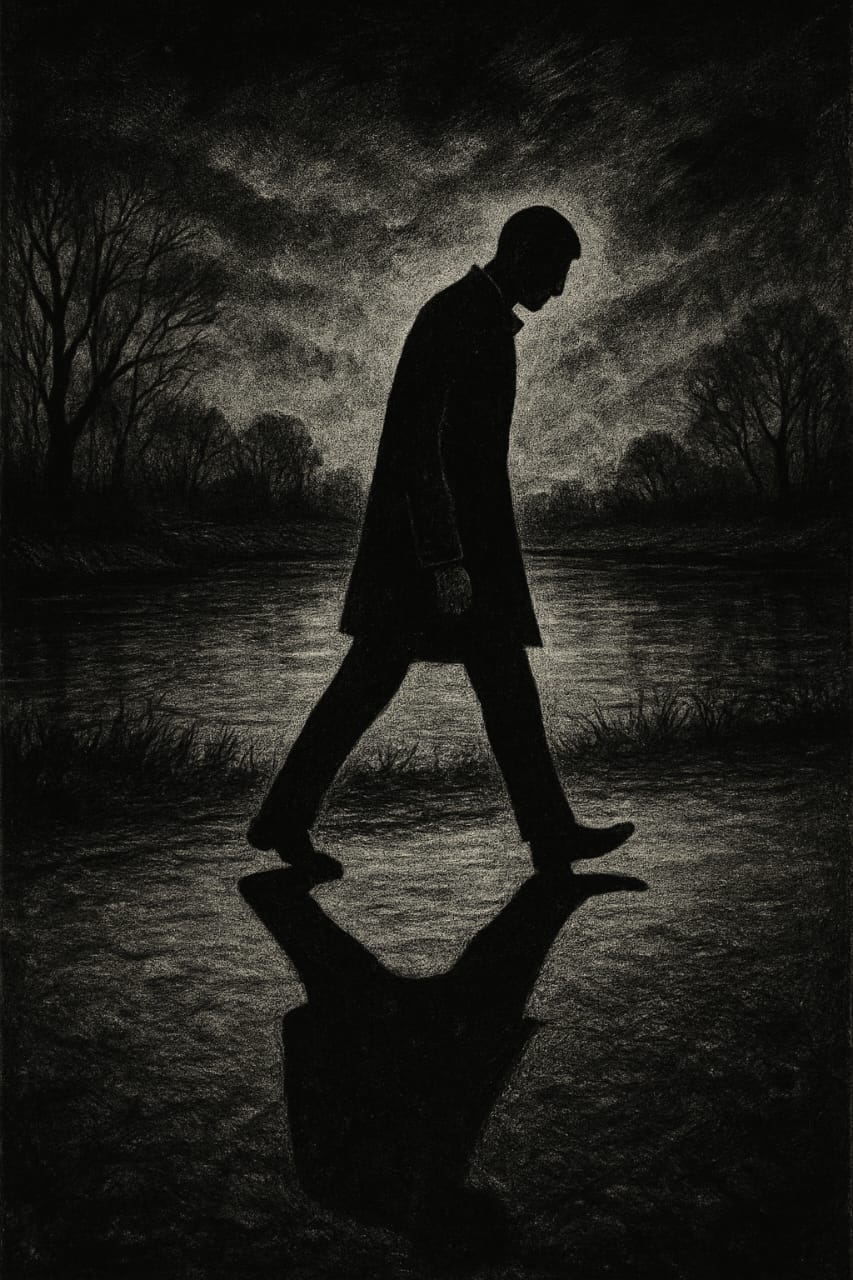
There was once a quiet man who lived in a small town by the river. He worked at the mill during the day and walked home at dusk, his figure stretched long by the sinking sun. The townsfolk hardly noticed him, but his shadow was always there, following faithfully, sometimes even seeming larger, more commanding than the man himself.
As the years went by, the man began to feel invisible. People forgot his name, forgot his deeds, but the shadow remained constant. He started to believe that his shadow carried more presence than he ever did. “Perhaps,” he thought, “it is not me that walks through this life, but my shadow.”
One evening, as he walked home, he stopped by the riverbank and looked at his reflection. The shadow stretched across the rippling water, dark and strong, while his own face seemed pale and fading.
It was then he understood: the shadow was not greater than him, but simply the trace of his existence. It could not move without him, could not breathe, could not choose. The shadow only bore witness to his steps.
From that day, he walked differently—head high, stride steady—knowing that even if the world forgot his name, every step he took left an imprint, and the shadow would always testify that he had lived, moved, and mattered.
