

By Ameer Ali.
Long ago, in a quiet valley cradled between whispering mountains, there flowed a sacred river called Zayana. The villagers believed it was the breath of the Earth itself — its waters could heal wounds, wash away sorrow, and even carry the prayers of the desperate into the heavens.
Once a year, during the moon’s brightest night, the villagers would gather by its banks, lighting candles and sending them afloat with whispered wishes. It was said the river remembered every voice, every tear, every secret.
Among those who loved the river most was a young girl named Leila. Orphaned at five, she had grown up sitting beside the current, telling it stories, singing songs her mother once hummed. She believed the river was her family — a living, listening soul. And in return, the river never let her feel alone.
As Leila grew, so did the valley. Roads were carved. Bridges were built. Tourists arrived. The sacredness of Zayana slowly faded beneath trash, factories, and noise. But Leila remained its guardian, pleading with officials, writing letters, planting flowers by its banks. No one listened.
Then one morning, the river stopped flowing.
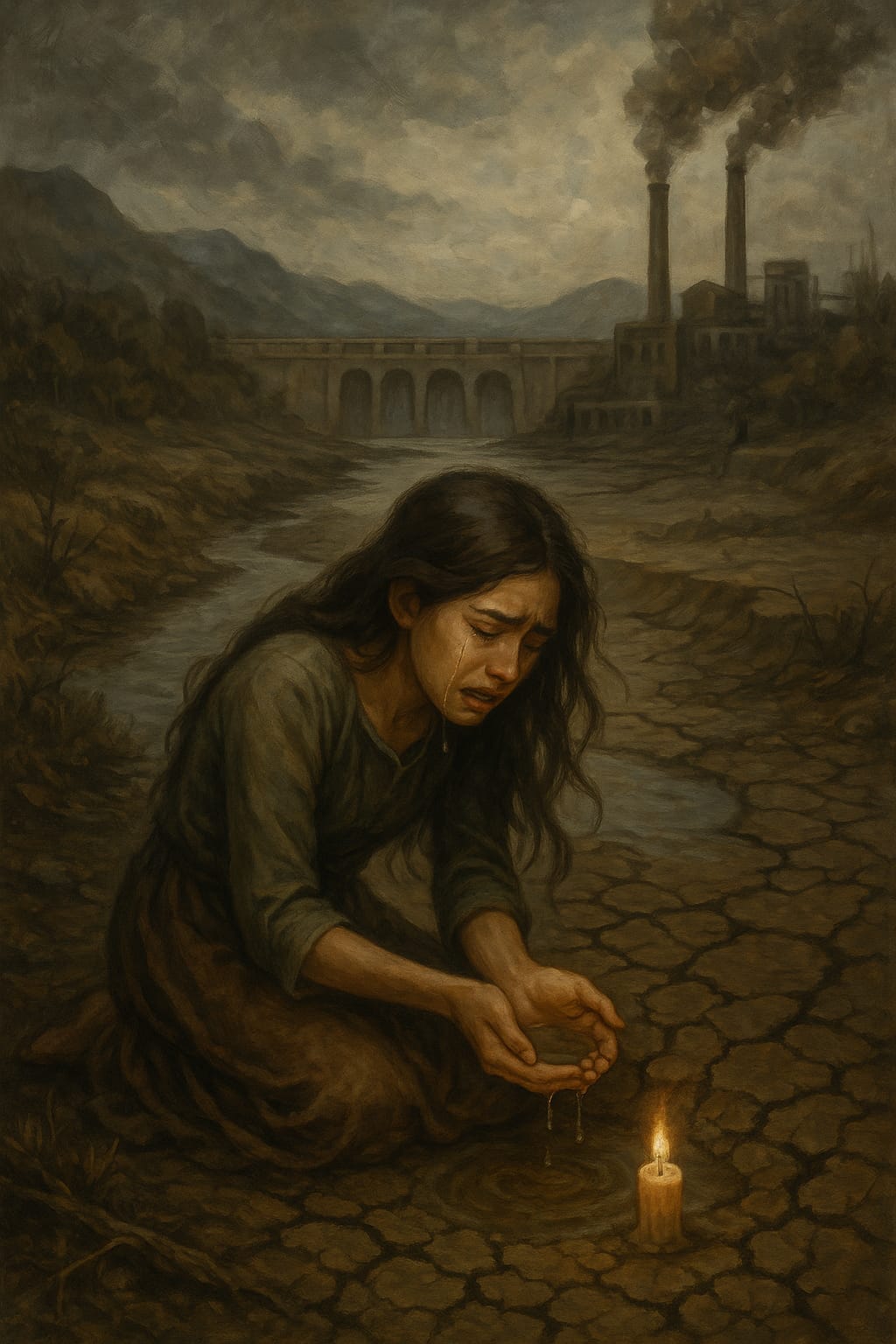
The villagers gathered, confused. Fish floated lifelessly. The stones were dry, the air still. Leila rushed to its source in the mountains — only to find machines drilling, trees felled, and a concrete dam choking the river’s throat.
She screamed, wept, fell to her knees. She cupped her hands in the last puddle of Zayana, now muddy and silent.
That night, Leila lit a candle and placed it in the last trickle of water she could find. It didn’t float. It sank.
She whispered, “I’m sorry.”
The river never spoke again.
And the valley — once full of songs, healing, and hope — slowly forgot how to pray.
