

By: Mostafa Amer
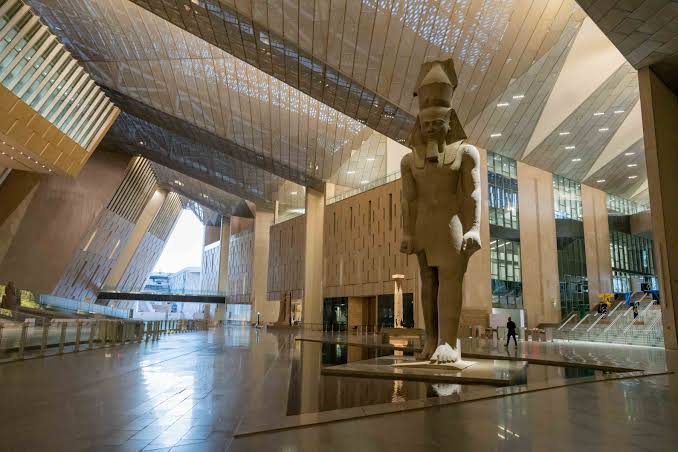
In the heart of Giza, where time bows to stone and the desert whispers the secrets of forgotten kings, a new marvel rises: the Grand Egyptian Museum. After years of anticipation, the doors are finally opening—not just to visitors, but to a reimagined narrative of Egypt’s eternal soul.
The museum, poised in the shadow of the Great Pyramids, is more than an architectural triumph; it is a bridge between past and present. Housing over 100,000 artifacts, including the complete collection of King Tutankhamun’s treasures, it promises an immersive journey into a civilization that once ruled not just lands, but the imagination of humankind.
Unlike traditional exhibitions, the Grand Egyptian Museum tells stories—intimate, awe-inspiring, and deeply human. Digital installations dance alongside mummified pharaohs. Light caresses ancient stone. The scent of old papyrus seems to linger in the halls. Every gallery is a stage where history performs, silently yet powerfully.
This opening is not just a cultural event—it is a statement. A reclamation of heritage. A signal to the world that Egypt is not a relic, but a living chapter in the story of civilization.
As the sun sets behind the pyramids and golden light spills across the museum’s façade, one cannot help but feel that history is not behind us—it is within us, watching, waiting, ready to speak again.
