

Written by: Manal Rabiey
In the early mornings, when the world was still dewy like a bird’s wing that had never known flight, I would greet the day with a mysterious fragrance filling the air—a blend of damp earth after dawn, the scent of fresh milk, and the calm smoke of slow-burning firewood. It wasn’t just morning; it was a timeless moment from my childhood, etched in memory as if carved into ancient stone.
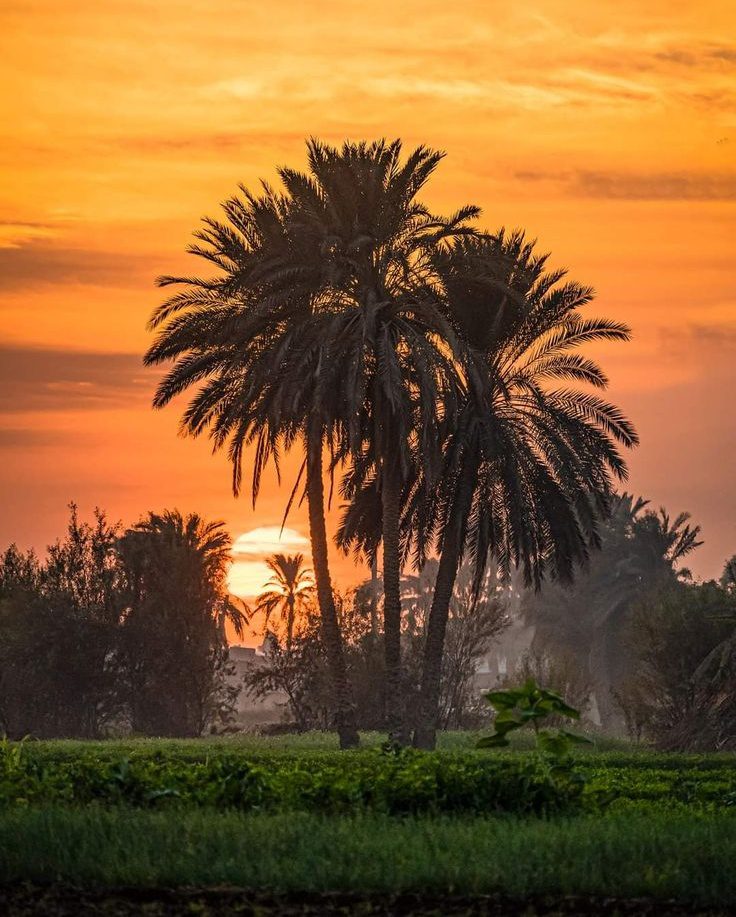
We were in my grandfather’s orchard—spacious, lush, and embracing like a kind-hearted mother. At its heart stood the great gumeiz tree, its thick trunk and silvery branches stretching out like gentle arms, shading the earth with sacred calm. I always preferred to sleep beneath it at night, on a mat of woven palm leaves, watching the stars between its lace-like leaves. Those leaves, shaped like fingers, swayed in the breeze, whispering old tales passed down by grandmothers.
I often heard my grandfather say, “This is a blessed tree. Not even flies or insects come near it. And if you’re wounded, its sap will heal you.” We believed him. If we scratched ourselves, we would apply the white milk from its leaves, and by morning, the wound would vanish—like a hidden hand had kissed it away. It wasn’t just a tree. It was a green mother, deeply rooted in the Egyptian soil, part of the land’s soul. Like Egyptian mangoes—whose flavor is unlike any in the world—it belonged wholly to Egypt.
The gumeiz tree resembled the goddess Isis in its grace and power. Blessed and nurturing, it fed the soil, shaded the weary, and cooled the laborer resting beneath it after hours in the field. It was a sanctuary, a green temple in the heart of the land, offering peace and forgiveness for one’s fatigue.
As the sun rose higher and light grew warmer, everything in the orchard would shift. I would catch a familiar scent from where I lay—melted butter, mingled with fresh milk and the promise of bread. My grandmother would step out, carrying a brass tray. She’d sit on her little stool beside the low table and begin shaping the dough, gently and with love, as if cradling a child. She’d spread soft yellow butter with her palm, massaging it into the dough, which yielded to her fingers like enchanted clay.
The bread—feteer—wasn’t mere food in her hands. It was ritual, ceremony, a sacred act passed down through generations. She’d wrap it, let it rest in a pool of butter, then light the wood fire in the clay oven my grandfather had built long ago. That oven looked like a small cave—an ancient cradle of fire that knew how to give bread its soul.
When she placed the feteer into the fire, the orchard transformed into a fragrant stage. The scent of melting butter meeting flame, the wheat releasing its steamy breath, filled the air with memory. I’d draw near to watch the dough swell like the morning sun, puffing and smoking, golden and luminous—like a piece of time itself.
Then, the family would gather. My grandfather sat on his stool, one hand resting on his knee, reciting old poetry. My aunt brought the milk, my father smiled as he gathered crumbs, and I sat close to my grandmother, watching her shining fingers, still slick with butter and flour, as she sliced the warm, steaming bread.
We laughed, ate, drank, and listened. Time itself seemed to slow down for us. These weren’t just moments—they were sacred rites, a legend reborn every morning, written by my grandmother’s hands, shaped by a mother’s love, and blessed by the land.
That day… was no ordinary day. It was a page from the Book of Time, engraved into my heart, holding within it all the meanings of comfort, belonging, and timeless love. It remains, like an ancient poem Egypt wrote in golden sunlight, sealed at the end with the mark of the gumeiz tree.
