

By: Ameer Ali
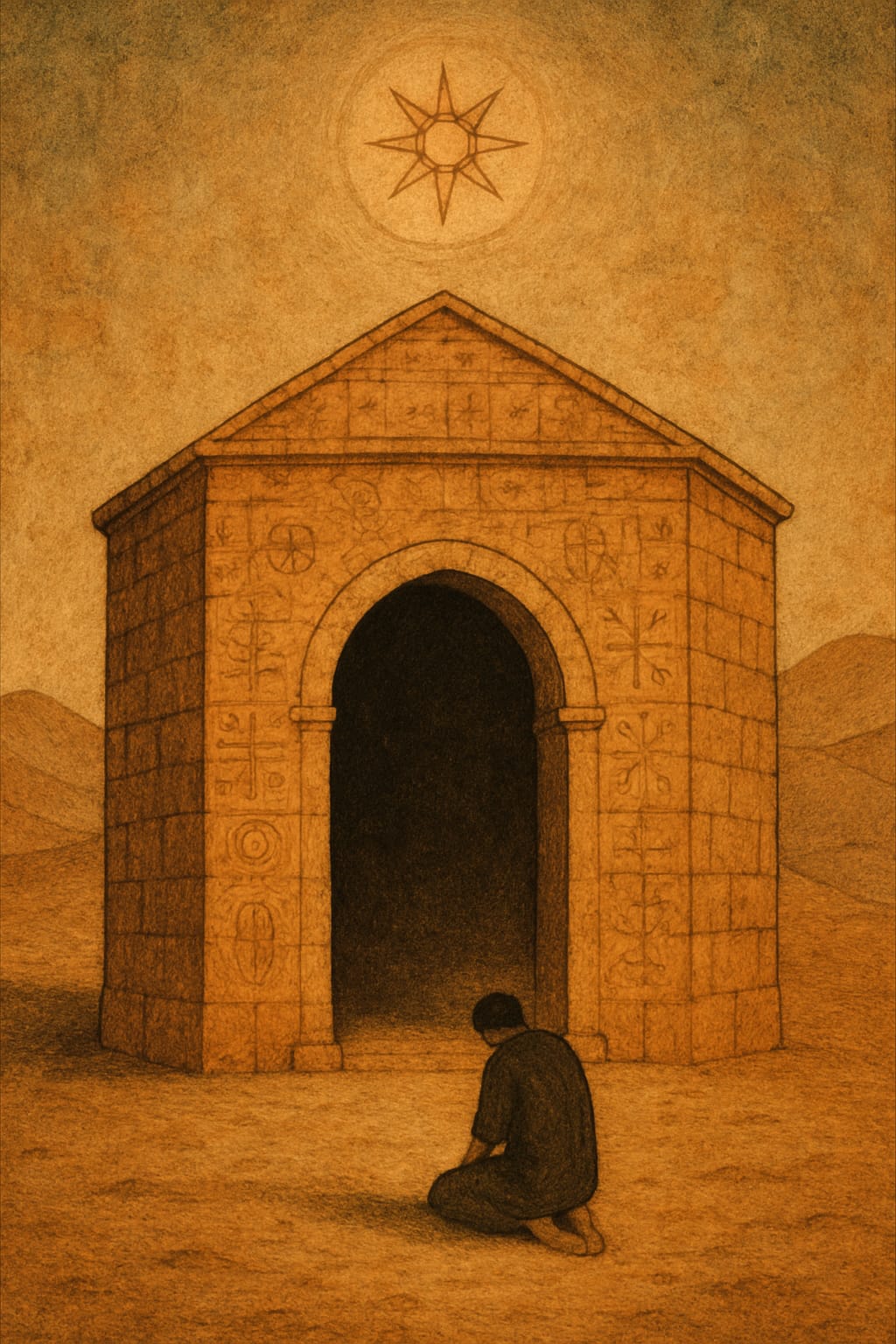
At the edge of the desert, where the dunes meet the sky and the wind carries ancient songs, stood a house unlike any other. Made of stone older than time, it had no doors, only an arched entrance, and its walls were carved with symbols no scholar could fully decipher. The villagers called it “The Sacred House of Silence.”
No one lived in it. No one owned it. And yet, every generation, people came to it with bare feet and quiet hearts. They left behind burdens, whispered prayers, or simply sat in silence under its open roof, where the stars could be seen even at noon.
It was said that the house listened.
One day, a boy named Zayd—angry at the world and heavy with grief after losing his parents in a storm—approached the house with clenched fists. He did not come to pray. He came to demand answers.
> “Why did you take them?” he shouted into the wind. “If you’re sacred, then speak! If you’re holy, then help!”
But the house did not reply. It stood as it always had—silent, unmoved, ancient.
Zayd fell to his knees. Days passed. He neither ate nor spoke. The villagers watched from a distance, but no one approached. On the fourth night, the wind shifted. It whispered through the stones of the house, not as words, but as feeling—deep, echoing peace.
Zayd opened his eyes. He looked up to see the night sky framed by the sacred arches. For the first time, he saw not emptiness, but presence—his parents’ laughter in the rustle of the sand, his mother’s voice in the breeze, his father’s strength in the stars above.
He did not receive an answer. But he received understanding.
Zayd rose and left the house—not healed, but no longer broken. He would return every year, not to ask, but to listen.
And so the house remained—not a place of miracles, but a space where hearts could touch the eternal.
