

By: Manal Rabie
Thousands of years ago, Egypt and Assyria stood as two mighty powers shaping the face of the ancient world. Yet their influence did not fade with the passing centuries; it flows quietly into our modern lives without us even noticing.
These civilizations left us not only silent stones, but also ideas, symbols, and ways of seeing the world—patterns we still practice today, though under different names and forms.
From Egypt, we inherited the concept of cosmic justice—Ma’at, which became the foundation of law and morality in later civilizations.
We also inherited rituals we still echo, such as celebrating the start of the year at a moment of natural renewal, just as the ancient Egyptians celebrated the Nile flood as a herald of fertility and life.
Even the circular wedding ring we wear today is a continuation of an ancient Egyptian symbol of eternal love, placed on the fourth finger in the belief that it contained a vein leading directly to the heart.
At the heart of this legacy stands the story of Hatshepsut, the queen who ruled Egypt in the garb of men and wore the crown of kings, yet carried within her the nurturing spirit of Hathor.
She saw justice and cosmic order as a royal mission, building temples to declare to the world: ruling is not only the power of the sword, but also the power of beauty and fairness.
Today, when we speak of a woman who leads without losing her femininity, we repeat a lesson Hatshepsut carved into the walls of her temple at Deir el-Bahari over three thousand years ago.
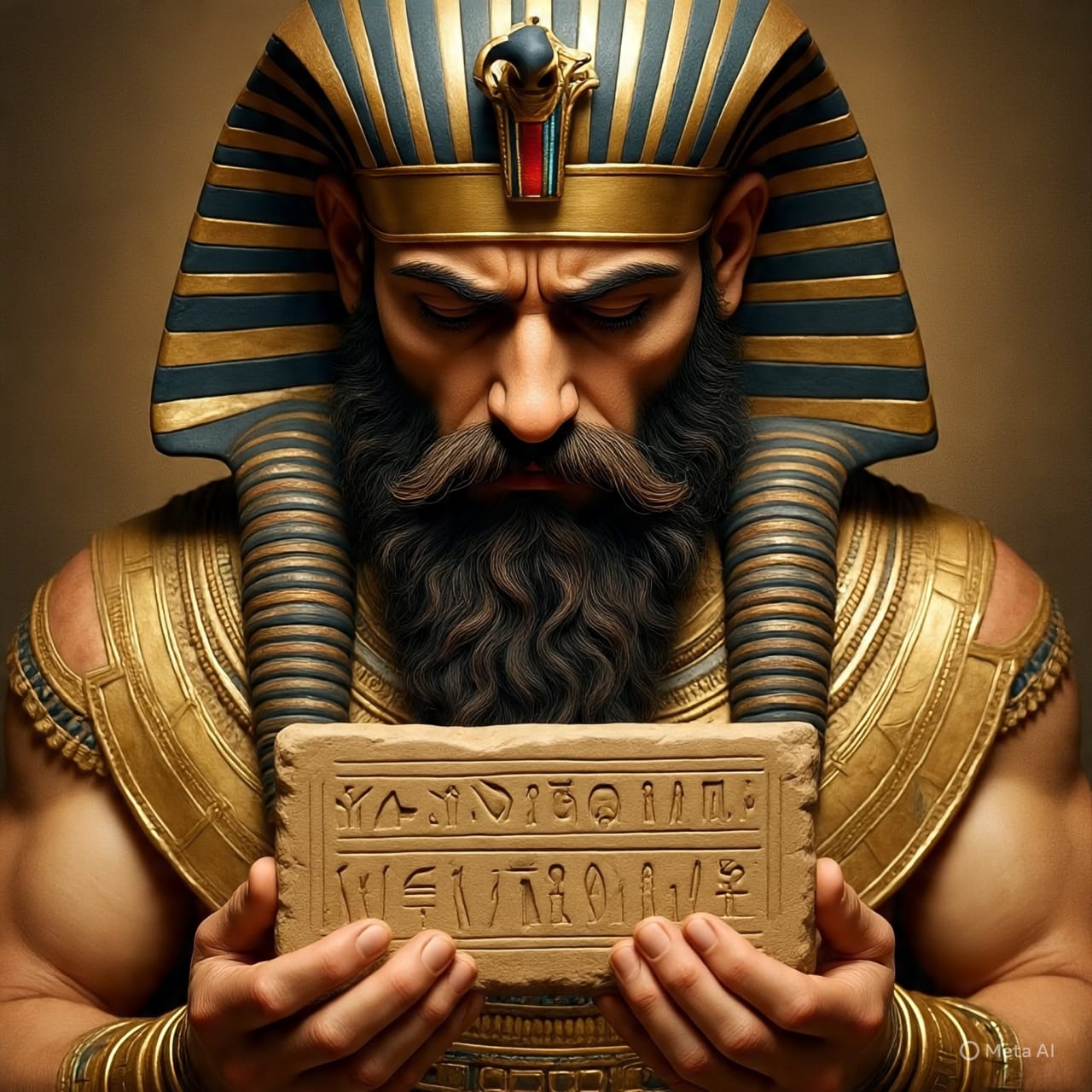
From Egypt also shines the name of Ramses II, the king who sought to etch his glory into stone and time.
The temples of Abu Simbel are not mere carved rock, but a political and artistic message proclaiming: Here stands a king who protects his land and embraces the sun.
Ramses understood that power needs an eternal image, and that art can be a weapon to deter enemies and inspire generations.
Assyria, in turn, granted the world an invaluable artistic, military, and architectural legacy.
The art of high relief carving on palace walls, capturing the triumphs of kings and the symbols of strength, inspired decorative and mural arts for centuries.
Among its epics rises the figure of Ashurbanipal, the warrior-scholar king, who led his armies to victory yet also gathered the largest library of his era, preserving thousands of clay tablets of science, myth, and law.
The idea that a ruler must be as learned as he is powerful is an Assyrian legacy that still whispers to every nation seeking its ideal leader.
And there was Sennacherib, the king who made Nineveh rival the wonders of the world, with hanging gardens and ingenious water channels.
He believed that the greatness of a kingdom is measured not only by its military reach, but by its ability to create a thriving environment for its people.
The concept of planned cities and flourishing infrastructure we see today has roots in Sennacherib’s urban ambitions.
Even the repeating geometric patterns in modern carpets and architecture owe part of their heritage to Assyrian taste, which saw repetition as a symbol of eternity and cosmic order—just as the Egyptians saw in the lotus columns of Karnak Temple a symbol of rebirth.
Egypt gave the world the idea of immortality through its art, temples, and the Great Pyramid.
Assyria offered the image of organized power to safeguard that immortality.
Between them, the roots of much of our modern concepts of authority, beauty, order, and life itself were formed.
In my view, when we realize that the stories of Hatshepsut, Ramses, Ashurbanipal, and Sennacherib are not just history but a mirror reflecting our present, we understand that the ideas and arts we live today are not born of our age alone, but are echoes of civilizations that carried the human dream through the millennia.
Conclusion
Egypt and Assyria are not forgotten pasts; they are pulses running through the veins of the present.
Ramses at Abu Simbel, Hatshepsut between the mountains of Thebes, Sennacherib in the gardens of Nineveh, and Ashurbanipal in his library—all left marks defying oblivion.
They built not only for stone, but for the idea, the dream, the eternity.
From the sun of the Nile to the stars of the Tigris, we have inherited strength, beauty, and order, becoming the children of two great civilizations whispering to us still: glory lies not in what we own, but in what we leave behind.
The present is the mirror of the past, and the future is born from their ashes.
